Salmon soup, known in Finnish as lohikeitto, is a true Finnish national dish because it combines the country’s most abundant natural resource, fresh salmon, with simple dairy-based cooking traditions that have fed Finnish families for generations. It holds a place in everyday Finnish life that few other dishes can claim, appearing on home tables, school canteens, and restaurant menus with equal frequency. Below, we unpack the questions that define what makes this beloved soup so special.
What ingredients go into a traditional Finnish salmon soup?
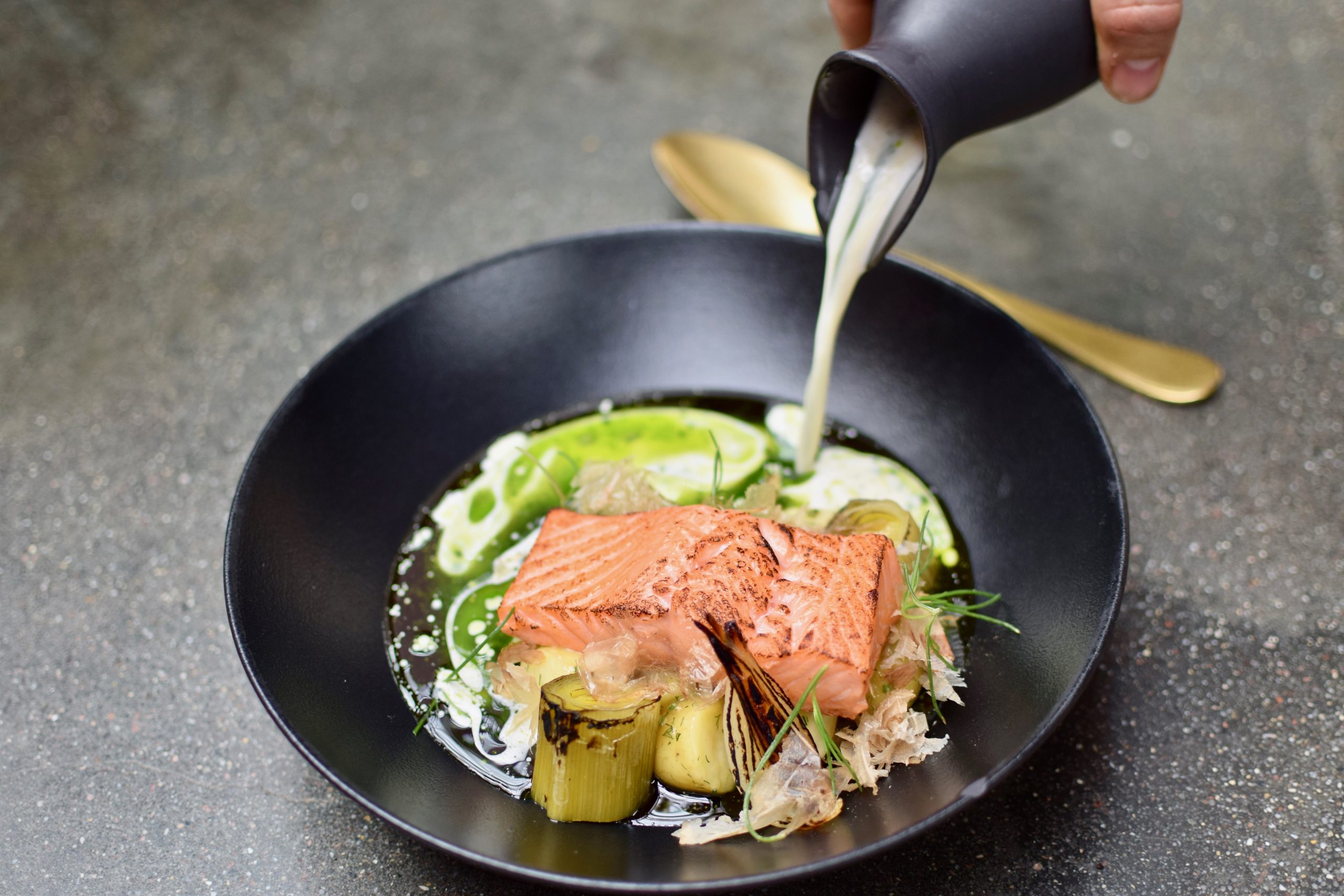
A traditional Finnish salmon soup is built from a short, honest list of ingredients: fresh salmon, waxy potatoes, leek, water or a light fish stock, cream, butter, dill, salt, and white pepper. The simplicity is intentional. Finnish culinary tradition places enormous value on letting high-quality raw ingredients speak for themselves rather than masking them with complex seasoning.
The salmon is the undisputed centerpiece. Ideally, it comes from cold, clean waters, which gives the flesh a firm texture and a clean, rich flavour. The potatoes absorb the creamy broth and provide body, while leek adds a gentle sweetness that balances the richness of the cream. Dill, stirred in at the very end, delivers the bright herbal note that most Finns would consider non-negotiable.
Cream is what separates Finnish salmon soup from many of its Nordic neighbours. The broth is not a thin, clear consommé but a velvety, full-bodied liquid that coats the palate. Some cooks add a small knob of butter just before serving to deepen the richness further. Allspice berries are a traditional addition in many regional recipes, lending a subtle warmth that works beautifully with fish.
The quality of each ingredient matters enormously. Because the recipe is so stripped back, there is nowhere to hide a mediocre piece of fish or a floury potato. This is why sourcing matters, and why we at Merimakasiini maintain direct relationships with local fishermen who deliver the day’s catch straight to the kitchen, ensuring the salmon in our lohikeitto has often been swimming in the Baltic just hours before it reaches the bowl.
How did salmon soup become so central to Finnish food culture?
Finnish salmon soup became central to the country’s food culture because salmon has historically been one of the most accessible and plentiful fish in Finnish waters, and dairy farming has long produced an abundance of cream and butter. Together, these two staples created a dish that was nourishing, affordable, and deeply satisfying across all social classes.
Finland’s geography tells much of the story. With thousands of lakes, rivers, and a long Baltic coastline, fish has been a dietary cornerstone for centuries. Salmon, in particular, was caught in great quantities in rivers like the Tornionjoki and Kemijoki, and coastal communities built their cooking traditions around it. Boiling fish with root vegetables and dairy was a practical method that required no special equipment and produced a meal that could feed a family through a cold northern winter.
Over time, lohikeitto moved from necessity to comfort food and eventually to a cultural symbol. It became a fixture in Finnish school lunches, a dish served at family gatherings, and a staple on restaurant menus featuring Finnish salmon dishes across the country. Its presence in everyday Finnish life is so consistent that it functions almost as a culinary shorthand for home, warmth, and Finnish identity.
The dish also benefited from Finland’s strong tradition of valuing local, seasonal, and unprocessed food. Lohikeitto requires no imported ingredients and no elaborate technique, which aligned perfectly with Finnish values of self-sufficiency and straightforwardness. That authenticity has kept it relevant even as Finnish cuisine has become more international and experimental.
What makes Finnish salmon soup different from other Nordic fish soups?
Finnish salmon soup is distinguished from other Nordic fish soups primarily by its generous use of cream and its focus on a single, premium fish rather than a medley of seafood. While Norwegian and Swedish fish soups often incorporate a wider variety of seafood or use a lighter, more broth-forward base, Finnish lohikeitto is defined by its rich, dairy-heavy character and its simplicity of composition.
The role of cream and dairy
In Norwegian fiskesuppe, cream is often present but the broth tends to be thinner and the flavour profile more delicate. Swedish fiskesoppa varies widely by region but frequently includes tomato, saffron, or a broader mix of shellfish, drawing influence from French bouillabaisse traditions. Finnish lohikeitto, by contrast, keeps the focus almost entirely on cream, butter, and salmon. The result is a soup that feels more substantial and warming, suited to the long, cold Finnish winters.
Simplicity as a defining principle
Many Nordic fish soups celebrate complexity, layering different textures and flavours from multiple types of seafood. Finnish salmon soup takes the opposite approach. The restraint in the ingredient list is not a limitation but a philosophy. The goal is to honour the salmon itself, and every other ingredient exists to support rather than compete with it. This makes lohikeitto one of the most ingredient-focused soups in Nordic cuisine, where the quality of the fish is impossible to disguise.
Why is the recipe often kept secret by Finnish restaurants?
Finnish restaurants keep their salmon soup recipes secret because lohikeitto, despite its simple ingredient list, has enormous room for variation in technique, proportion, and seasoning. A restaurant’s particular version of the soup often becomes its signature, a reason guests return, and a point of genuine competitive pride.
The variables that distinguish one lohikeitto from another are subtle but significant. The ratio of cream to stock, the timing of when dill is added, whether allspice or bay leaf is used, how long the potatoes are cooked before the fish goes in, and whether the broth is reduced before serving all affect the final result in ways that are difficult to replicate without knowing the exact method. A recipe that has been refined over years or even decades carries accumulated knowledge that goes beyond a simple list of ingredients.
Our own lohikeitto at Merimakasiini is a clear example of this. The recipe has been in use for over 30 years, refined and protected as one of our most defining dishes. It remains our best-selling dish throughout the year, which speaks to the loyalty it inspires. For many guests, that specific bowl of soup is the reason they return, and the recipe’s secrecy is part of what makes the experience feel irreplaceable.
There is also something culturally fitting about recipe secrecy in Finland. Finnish cooking has always been personal and familial. Home cooks pass recipes between generations with small adjustments that make each version distinct. Restaurants inherit this tradition, treating their interpretation of a classic dish as something worth protecting and preserving.
When is Finnish salmon soup traditionally served?
Finnish salmon soup is traditionally served year-round, but it holds particular significance as a warming lunch or early dinner dish during the colder months from autumn through early spring. It is also a common feature of Friday lunches across Finland, a tradition rooted in both practical and cultural habit.
The Friday lunch tradition deserves special mention. In Finnish workplaces, schools, and restaurants, lohikeitto has long been a popular Friday staple. The association likely developed because fish was traditionally eaten on Fridays in many European cultures, and salmon soup was a practical, satisfying way to mark the end of the working week. This habit persists today, and many Finns associate the smell of lohikeitto simmering on the stove with the particular pleasure of a Friday afternoon.
Beyond the weekly rhythm, salmon soup appears at family celebrations, midsummer gatherings, and as a restorative meal after outdoor activities in cold weather. It is also a natural choice when fresh salmon is at its seasonal peak, though because farmed and frozen salmon are widely available, the dish is genuinely prepared in every season.
If you want to experience lohikeitto at its very best, the most practical advice is to seek it out where the fish is sourced as freshly as possible. The difference between soup made with salmon caught that morning and soup made with fish that has travelled a long supply chain is immediately noticeable in both texture and flavour. Asking about the provenance of the fish before you order is always a reasonable question, and any kitchen proud of its lohikeitto will have a confident answer ready.