
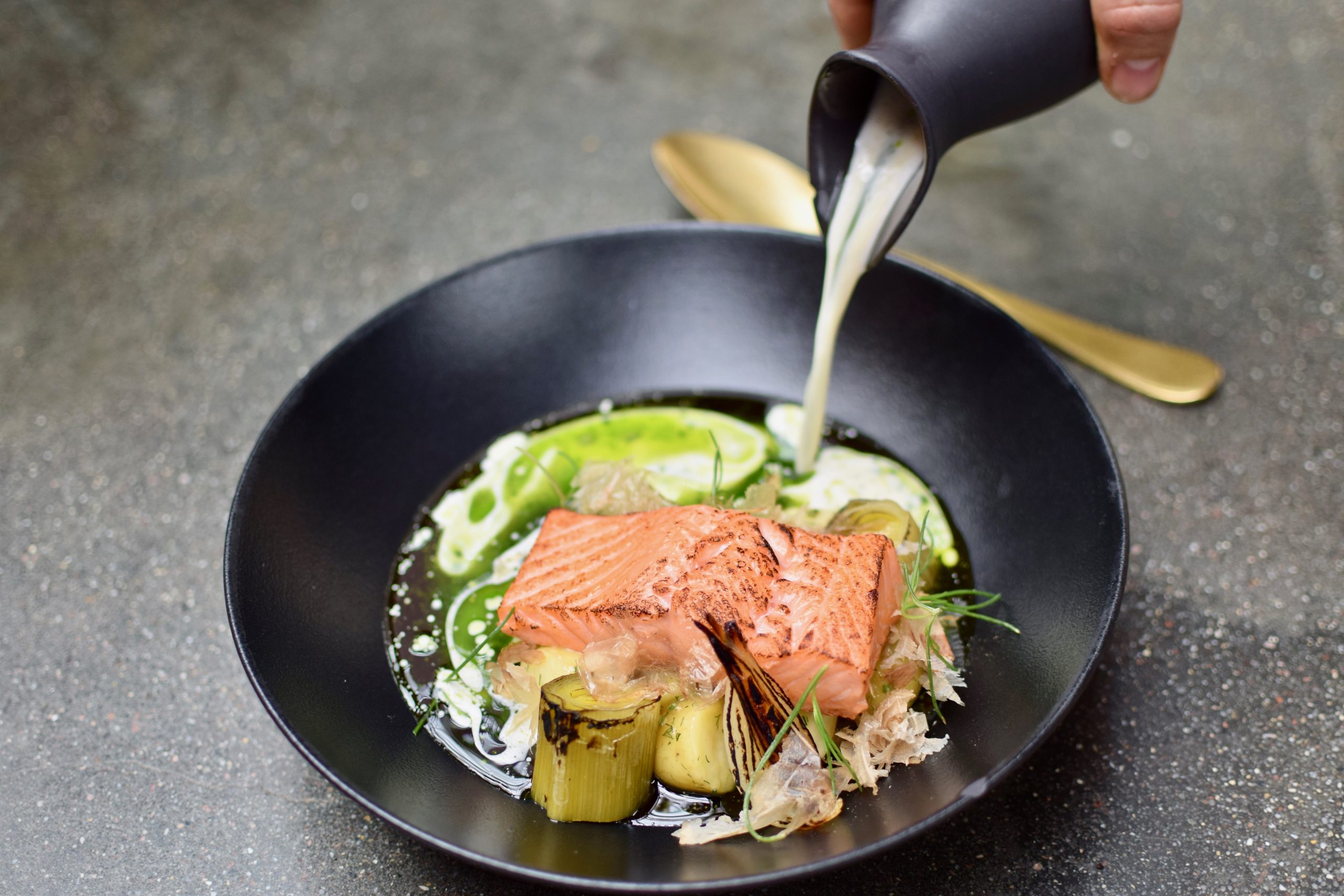
Finnish salmon soup, known in Finnish as lohikeitto, can absolutely be prepared in advance without losing its core flavor. The key is knowing which components to cook ahead and which to add fresh, since the soup’s richness comes from delicate ingredients that behave differently under heat and time. Below, we address the most common questions home cooks have about making this beloved dish ahead of schedule.
How long can Finnish salmon soup be stored without losing flavor?
Finnish salmon soup can be stored in the refrigerator for up to two days without significant flavor loss, provided it is cooled quickly after cooking and kept in an airtight container. Beyond 48 hours, the cream begins to separate, and the salmon takes on a stronger, less fresh taste that undermines the soup’s characteristic delicacy.
The flavor of lohikeitto is built on a balance between the mild sweetness of salmon, the earthiness of potatoes, and the richness of cream. All three of these elements are time-sensitive in their own way. Potatoes absorb liquid and soften further overnight, which actually improves the body of the broth. The salmon, however, continues to cook gently in the residual heat of the soup even after it leaves the stove, and this process does not stop entirely in the refrigerator.
For best results, store the soup in portions rather than one large batch. Smaller volumes cool faster, which slows bacterial growth and preserves the integrity of the cream. If you plan to serve lohikeitto the next day, the flavor is often at its most rounded, since the dill and allspice have had time to fully infuse the broth. Day two is generally still excellent. Day three is when quality begins to decline noticeably.
What happens to the salmon and cream when soup is reheated?
When Finnish salmon soup is reheated, the two most vulnerable ingredients are the salmon and the cream. Salmon that has already been cooked will continue to firm up and dry out with each subsequent heating, losing its soft, flaky texture. Cream, when brought to a boil during reheating, is prone to curdling, which breaks the smooth consistency that defines a well-made lohikeitto.
The solution is low and slow reheating. Place the soup over medium-low heat and stir gently, never allowing it to reach a full boil. If you notice the cream beginning to look grainy or the surface becoming oily, reduce the heat immediately. The goal is to bring the soup to a gentle simmer, just enough to warm it through without pushing the proteins and fats past their tolerance.
Salmon that has been stored in the soup for a day tends to become denser in texture. This is not necessarily a flaw, but it is a change worth anticipating. Some cooks prefer to remove the salmon pieces before storing, keep them separately, and add them back during the final moments of reheating. This approach preserves the texture most effectively, though it requires a little extra planning.
How can you prepare Finnish salmon soup ahead without ruining the texture?
The most effective way to prepare Finnish salmon soup in advance without ruining the texture is to build the soup in stages, cooking the base ahead of time and adding the salmon and cream only when you are ready to serve. This approach separates the robust elements from the delicate ones and gives you full control over the final result.
Build the broth and vegetables ahead
The foundation of lohikeitto, which typically includes fish stock, leek, potatoes, carrots, and spices such as allspice and white pepper, can be made one to two days in advance without any quality loss. In fact, allowing the stock to rest overnight deepens its flavor. Cook the vegetables until just tender, not fully soft, since they will continue to absorb liquid as they sit. Store the broth and vegetables together in the refrigerator.
Add salmon and cream only at serving time
When you are ready to serve, bring the base back up to a gentle simmer and add the salmon pieces and cream at this stage. The salmon needs only a few minutes to cook through in hot broth, and the cream needs only to be warmed, not boiled. Finish with fresh dill, which loses its brightness quickly and should never be added to a batch you intend to store. This two-stage method delivers a soup that tastes freshly made even when the groundwork was laid the day before.
Does reheating affect the flavor of a 30-year-old recipe?
Reheating does affect the flavor of any salmon soup recipe, including one built on decades of refinement, but the impact depends almost entirely on technique. The underlying flavor profile built into a long-standing recipe, developed through careful balancing of spices, stock depth, and ingredient ratios, remains largely intact when the soup is reheated gently. What suffers most is not the recipe itself but the freshness of its most volatile elements.
At Merimakasiini, our lohikeitto has been made using the same secret recipe for over 30 years, and its character is rooted in the quality of the ingredients from the very start. A recipe that relies on the natural sweetness of freshly caught Baltic salmon and the brightness of dill will always taste slightly different on the second day, not because the recipe has changed, but because those ingredients are inherently time-sensitive.
The spice elements, allspice, bay leaf, white pepper, and the richness of the stock, carry through reheating very well. These deeper flavor notes often become more pronounced after a night in the refrigerator. What diminishes is the freshness on the top layer: the brightness of the dill, the silkiness of the cream, and the tender, just-cooked quality of the salmon. A thoughtful cook can restore much of this by adding a small amount of fresh dill and a splash of cream during reheating, which revives the soup’s liveliness without altering its essential character.
Should you freeze Finnish salmon soup for later use?
Freezing Finnish salmon soup is generally not recommended if you want to preserve its texture and flavor. Cream-based soups do not freeze well as a rule, because the emulsion breaks during freezing and thawing, resulting in a grainy, separated consistency that is difficult to restore. The salmon also becomes noticeably drier and more crumbly after being frozen and reheated.
If you want to freeze a batch for convenience, the best approach is to freeze only the broth and vegetable base, without the cream or salmon. This component freezes reliably for up to two months and retains its flavor well. When you are ready to use it, thaw the base overnight in the refrigerator, reheat it gently, and add fresh salmon and cream at the end. The result will be far closer to a freshly made lohikeitto than a fully assembled soup that has been frozen.
For those who love Finnish fish soup and want to experience it at its absolute best, nothing replaces a bowl made to order with the freshest possible ingredients. The difference between a frozen-and-reheated version and one prepared fresh is most noticeable in the salmon itself, which should be tender and just cooked, never rubbery. If you are planning a gathering and want to serve lohikeitto at its peak, prepare the base well in advance, keep the salmon fresh, and bring it all together in the final few minutes before the meal. That is the approach that honors both the recipe and the ingredients. You can explore our full Finnish seafood dining menu to see how we serve lohikeitto and other traditional dishes.