A waterfront restaurant is ideal for private group events when it combines unobstructed views, flexible dining spaces, a menu that scales gracefully across dietary needs, and staff experienced in coordinating larger parties. The setting itself does much of the work: water creates a natural focal point that relaxes guests, sparks conversation, and gives any occasion a sense of occasion without requiring elaborate decoration. The questions below unpack exactly what to look for, what to ask, and how to get the most out of a harbour dining experience for your group.
What features make a waterfront venue work for large groups?
A waterfront venue works well for large groups when it offers adaptable floor plans, dedicated event coordination, strong acoustics management, and clear sight lines to the water from most seats. These practical elements, combined with the visual drama of a harbour setting, allow the space to serve both the logistical and atmospheric needs of a private gathering.
Space flexibility is the first thing to assess. A room that can be configured for a long communal table, a series of smaller round tables, or a standing reception gives an organiser genuine control over the event’s dynamic. Rigid layouts force guests into formats that may not suit the occasion.
Acoustic comfort matters more than many organisers anticipate. Hard surfaces near water, such as large windows and stone or timber floors, can amplify background noise significantly. Venues that have invested in sound-dampening materials, or that offer semi-enclosed spaces, allow conversation to flow naturally even when the group is large.
Dedicated service for private groups is another distinguishing feature. When a waterfront restaurant assigns a specific point of contact for the event, pre-ordering runs more smoothly, dietary requirements are handled in advance, and the evening itself feels effortless rather than improvised. At Merimakasiini, for example, larger groups can arrange bookings outside regular opening hours, which eliminates the distraction of a busy public dining room entirely.
How does a harbour setting enhance the group dining experience?
A harbour setting enhances group dining by providing a shared visual anchor that reduces the social pressure on guests to perform conversation. When everyone at the table can turn toward the same view, silence becomes comfortable rather than awkward, and the atmosphere does a portion of the hosting work that would otherwise fall on the organiser.
There is also a psychological dimension to dining near water. Research in environmental psychology consistently links proximity to water with reduced stress and heightened sensory awareness, both of which make guests more receptive to food, company, and the overall experience. A meal eaten beside a working harbour, with boats moving and light shifting on the surface, feels inherently more memorable than one in a windowless private dining room.
For corporate groups in particular, the harbour context provides neutral ground. Unlike an office canteen or a generic hotel ballroom, a waterfront restaurant carries no internal hierarchy or association with work stress. Guests arrive as equals in front of the same view, which tends to open up conversation and ease the transition between professional and social modes.
Seasonal variation adds another layer. A summer evening on a terrace overlooking the sea feels categorically different from a winter dinner where the harbour is framed through panoramic windows and the contrast between the warmth inside and the cold outside sharpens the sense of comfort and intimacy.
What should a group menu at a seafood restaurant include?
A group menu at a seafood restaurant should include a structured set of courses with at least one fish or seafood option at each stage, clear alternatives for guests who do not eat seafood, and transparent allergen information provided in advance. The best group menus balance the restaurant’s culinary identity with the practical reality that any large group will contain diverse preferences and dietary needs.
A well-designed group menu typically offers two or three choices per course rather than an open à la carte selection. This approach allows the kitchen to prepare efficiently while still giving guests meaningful agency. For a seafood restaurant, the fish course is the natural centrepiece and should showcase the kitchen’s strongest, most seasonal offering.
Our group menus for private dining events illustrate this structure clearly. The Menu Makasiini at 47 euros per person moves from a seasonal salad through a mushroom and tofu rice paper course to a chocolate and coconut mousse dessert, with vegan options available throughout. The Menu Merenneito at 50 euros per person centres on grilled Arctic char with pumpkin and hollandaise, preceded by beef carpaccio. The Menu Telakka at 56 euros per person opens with a crayfish soup and hand-peeled Arctic prawns before a beef tenderloin main course. Each menu closes with the same dessert, which simplifies service without sacrificing the sense of a composed, thoughtful meal.
Allergen flexibility is non-negotiable for group events. Menus that can accommodate gluten-free and vegan requirements without requiring guests to eat a diminished version of the meal show genuine hospitality. Confirming these adaptations at the booking stage, rather than on the night, prevents awkward moments at the table.
How important is fresh, locally sourced seafood for group events?
Fresh, locally sourced seafood is highly important for group events because it directly determines the quality of the centrepiece dishes and signals to guests that the restaurant has taken the occasion seriously. Seafood that has been frozen and transported over long distances loses the texture and flavour complexity that make a fish course genuinely impressive, and experienced diners notice the difference.
For a private group event, the food is both the sustenance and the statement. Guests remember a piece of perfectly cooked, day-fresh Baltic fish far longer than they remember a competent but unremarkable plate. Local sourcing also gives the meal a sense of place: eating fish caught in the waters visible from the restaurant window connects the food to the setting in a way that imported produce cannot replicate.
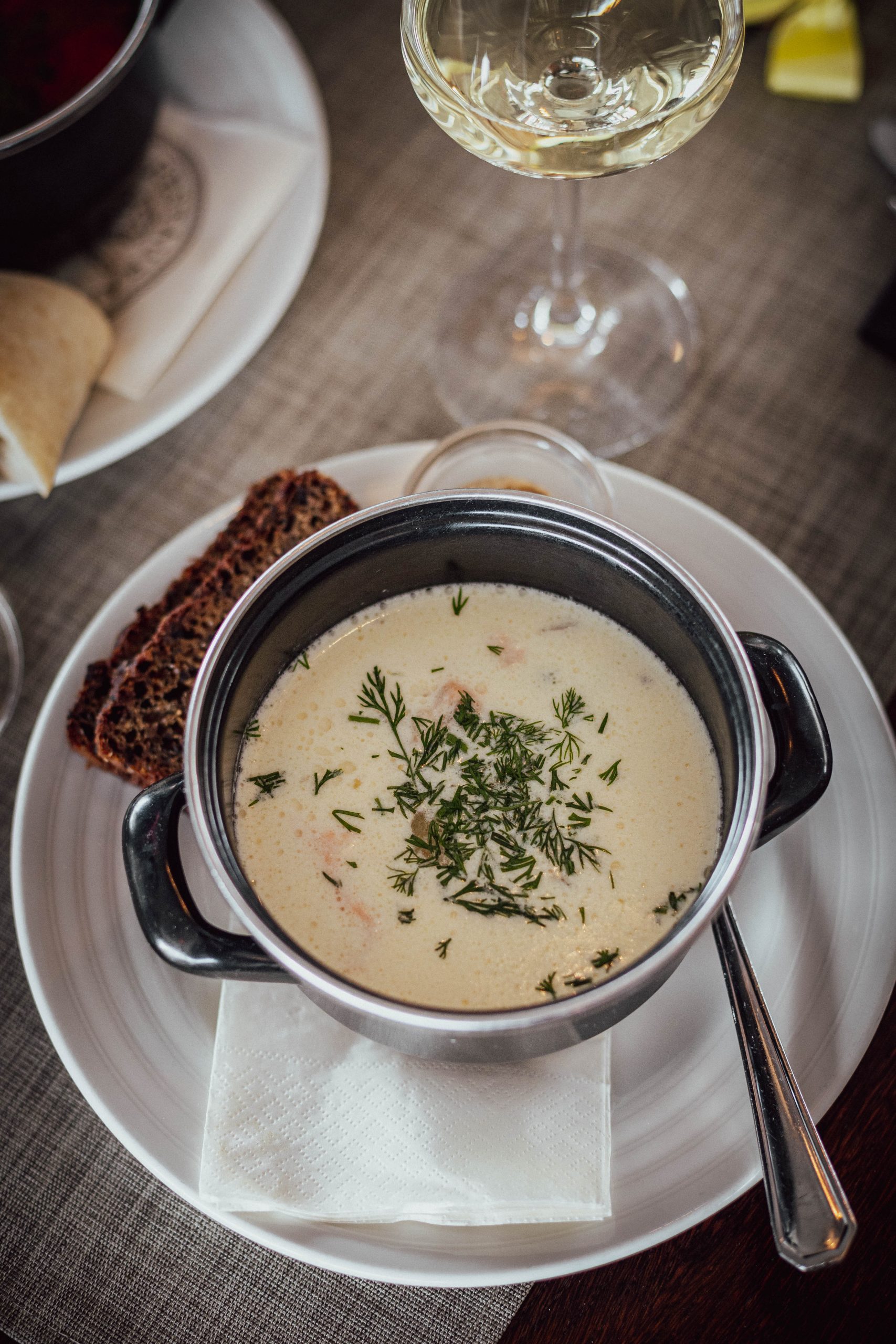
We maintain direct relationships with local fishermen who deliver their catch straight to our kitchen, meaning the fish on a group menu may have been swimming in the Baltic Sea only hours before it reaches the table. This supply chain is not a marketing detail but a practical commitment that shapes every dish we serve, from our legendary salmon soup to seasonal specials that change as the catch does.
For event organisers, sourcing transparency is also a useful signal of overall kitchen standards. A restaurant that can explain where its fish comes from and how recently it arrived is a restaurant that applies the same rigour to preparation, storage, and service. That consistency matters when you are responsible for the dining experience of an entire group.
When is the best time of year to book a waterfront restaurant for a private event?
The best time of year to book a waterfront restaurant for a private event depends on the atmosphere you want to create. Summer offers outdoor terrace dining with long Nordic evenings and open harbour views, while autumn and winter provide intimate indoor settings where the contrast between the warmth of the dining room and the weather outside creates a distinctly cosy atmosphere.
In Helsinki, summer bookings at waterfront venues fill quickly, particularly from June through August when the terrace season is at its peak. Groups planning a summer event should aim to book several months in advance, especially for weekend evenings or larger party sizes. The long daylight hours and the activity of a working harbour in summer create an energy that is difficult to replicate at any other time of year.
Autumn and winter, however, offer advantages that summer cannot. Availability is generally better, pricing may be more flexible, and the indoor harbour view takes on a different but equally compelling character. A private dinner in November, with the harbour lit at dusk and the restaurant largely reserved for your group, can feel more exclusive and atmospheric than a busy midsummer evening shared with the general public.
Spring is an underrated season for private group dining. The harbour comes back to life in April and May, daylight returns noticeably, and the seasonal menu transitions toward lighter, fresher preparations that reflect the change. Groups booking in 2026 who want a balance of good availability and a vibrant setting should consider late April or May as a strong option.
What questions should you ask before booking a waterfront restaurant for a group?
Before booking a waterfront restaurant for a group, you should ask about minimum guest numbers, menu flexibility, allergen handling, deposit and cancellation terms, whether the space can be exclusively reserved, and what happens if the event runs longer than planned. These questions surface the practical details that determine whether the booking will be straightforward or stressful to manage.
Start with the space itself. Ask whether the area reserved for your group is physically separated from the general dining room, or whether other guests will be seated nearby. A genuinely private event requires either a dedicated room or an arrangement where the restaurant is booked exclusively for your party.
Menu questions should go beyond the printed options. Ask whether the group menu can accommodate guests who have not confirmed dietary requirements in advance, and how the restaurant handles last-minute changes on the evening. A kitchen experienced in group events will have a clear, calm answer to this.
On the commercial side, clarify the deposit structure, the deadline for final guest numbers, and the cancellation policy. Understanding these terms before signing anything prevents misunderstandings that can sour the relationship between organiser and venue before the event has even taken place.
Finally, ask about the view. This sounds obvious for a waterfront venue, but not every seat in a harbour restaurant faces the water. Confirm that the tables reserved for your group have genuine sight lines to the harbour, and if you are booking for a summer event, ask whether the terrace is included or whether it remains open to other guests. The harbour view is the reason you chose a waterfront venue for private group dining in the first place, and it should be guaranteed, not assumed.