Every international traveler visiting Helsinki should try Finnish salmon soup, fresh Baltic herring, rye bread, and wild berries: these are the flavors that define Finnish food culture. Finnish cuisine is built on clean, simple ingredients shaped by the sea, forests, and long winters, making it distinct from other European food traditions. This guide works through the most important questions travelers ask about what to eat in Helsinki, from iconic dishes to the best seasons to eat them.
What makes Finnish cuisine unique compared to other Nordic food cultures?
Finnish cuisine is unique among Nordic food cultures because of its deep reliance on wild and foraged ingredients, its strong connection to the Baltic Sea and inland lakes, and its preference for simple preparation methods that let raw ingredient quality speak for itself. Where Danish food leans toward elaborate technique and Norwegian cuisine centers on fjord fish, Finnish cooking is quieter and more elemental.
Finland’s geography shapes its food in ways that are difficult to replicate elsewhere. The country has thousands of lakes and a long Baltic coastline, which means freshwater fish like pike-perch and whitefish sit alongside saltwater catches in everyday cooking. Forests provide wild mushrooms, lingonberries, cloudberries, and bilberries that appear in everything from sauces to desserts.
Finnish food also carries the influence of long, dark winters. Preservation techniques like salting, smoking, and pickling are central to the tradition, and dishes tend toward warmth and substance. Rye is the dominant grain rather than wheat, giving Finnish bread a dense, sour character that sets it apart from Scandinavian white loaves. The result is a cuisine that feels honest and grounded, shaped more by landscape than by culinary fashion.
What is Finnish salmon soup and why is it a must-try dish?
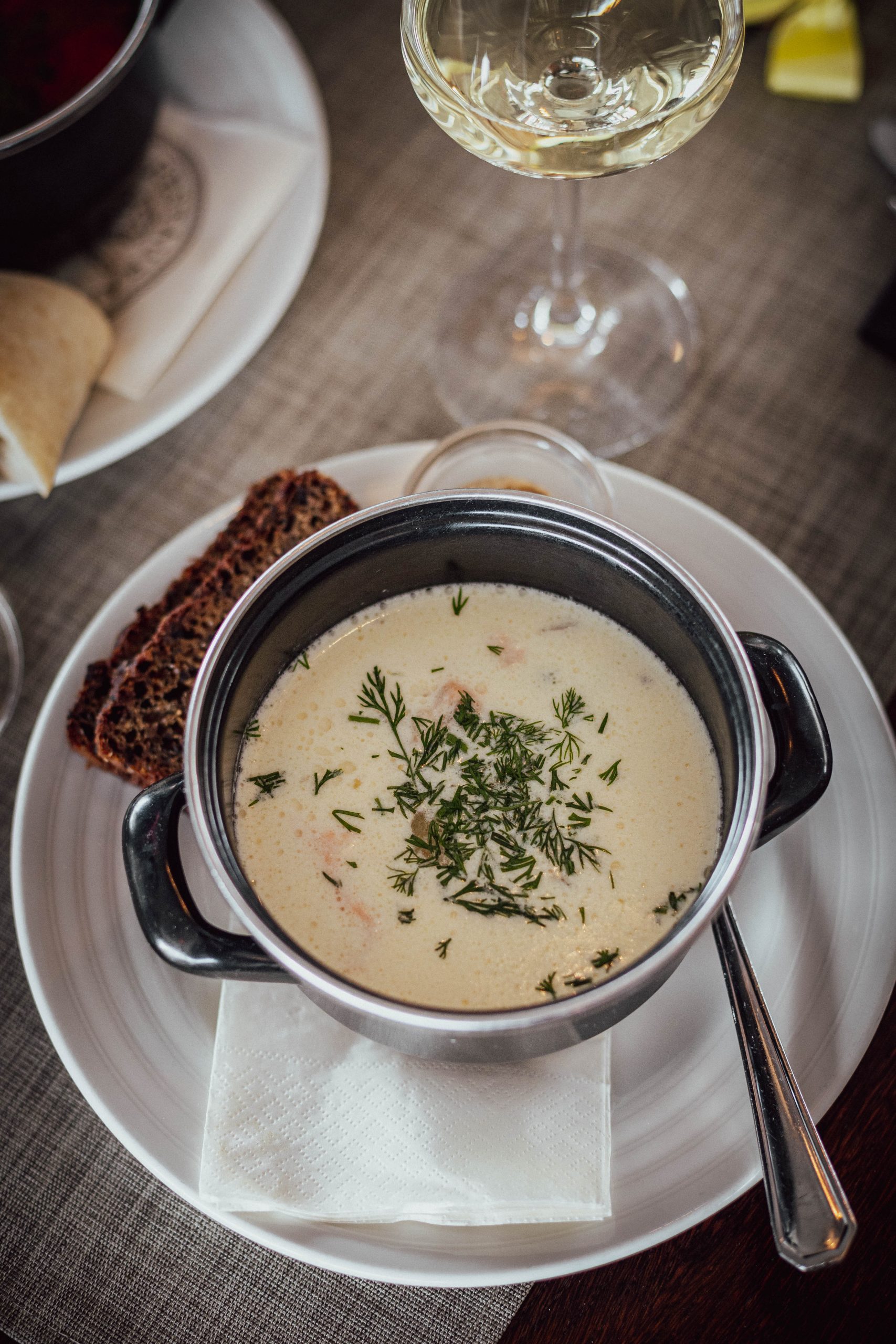
Finnish salmon soup, known as lohikeitto, is a creamy, milk-based soup made with fresh salmon, potatoes, leeks, and dill. It is one of the most beloved traditional Finnish dishes and a genuine must-try for any visitor, because it captures the essence of Finnish home cooking in a single bowl: simple ingredients, careful seasoning, and exceptional freshness.
The dish has roots in Finnish coastal communities where salmon was abundant and practical cooking was a necessity. A good lohikeitto relies almost entirely on the quality of the fish. The salmon should be fresh enough that the broth carries a clean, sweet flavor rather than anything heavy or overpowering. Dill, allspice, and a touch of cream round out the taste without masking the fish.
At Merimakasiini, our lohikeitto is the single most popular dish on the menu, served year-round and prepared using a recipe that has remained unchanged for over 30 years. It comes with traditional archipelago bread and browned butter, which is the classic accompaniment. The soup is available in two sizes (14€ or 20€), and the recipe itself is the kind of closely held culinary secret that only decades of practice produce. If you try one Finnish dish in Helsinki, this is the one.
What other seafood dishes should visitors eat in Helsinki?
Beyond salmon soup, visitors to Helsinki should prioritize Baltic herring, whitefish, crayfish, and cold-water shrimp. These are the seafood staples of Finnish cooking, and each reflects a different dimension of the country’s relationship with its waters.
Baltic herring
Baltic herring (silakka) is arguably Finland’s most culturally significant fish. It has fed coastal communities for centuries and remains a fixture of Finnish food markets, particularly the famous Helsinki Baltic Herring Market held each October. Herring is typically pan-fried in rye flour or served pickled, and its mild, slightly oily flavor pairs naturally with rye bread and mustard.
Whitefish and cold-water shrimp
Whitefish (siika) is a more refined option, prized for its delicate texture and clean taste. It lends itself to a range of preparations, from raw tartare to cured rillette to lightly cured ceviche. Our whitefish starter and full seafood menu presents the fish in several forms alongside house bread and roe, giving a single dish that demonstrates the versatility of this underrated species.
Cold-water shrimp from Arctic and northern waters are another highlight. They are smaller than warm-water varieties but far more flavorful, with a naturally sweet, briny taste. Our shrimp smørrebrød (28€) uses hand-peeled Arctic shrimp on brioche bread with fresh vegetables and lime mayonnaise, which is a contemporary take on a classic Nordic open sandwich. If you want to understand why Finns take shrimp quality seriously, this dish makes the case clearly.
Are there traditional Finnish foods beyond fish that travelers should know about?
Yes, Finnish cuisine extends well beyond seafood. Traditional Finnish foods that every traveler should know include rye bread, Karelian pasties, reindeer dishes, wild berry preparations, and Finnish cheeses. These foods reflect the inland and northern dimensions of Finnish food culture, which are just as important as the coastal tradition.
Rye bread (ruisleipä) is the foundation of Finnish eating. Dense, sour, and deeply flavored, it bears little resemblance to the soft wheat bread familiar to most international visitors. It is eaten at virtually every meal and is one of the most distinctive tastes in Finnish food culture. Archipelago bread, a slightly sweeter rye loaf made with molasses and often syrup, is the coastal variation and a natural partner to fish dishes.
Karelian pasties (karjalanpiirakka) are thin rye-crust pastries filled with rice porridge, traditionally eaten with a mixture of butter and hard-boiled egg. They are sold at bakeries and markets across Helsinki and make an excellent quick bite while exploring the city.
Reindeer meat is a northern Finnish specialty that appears in Helsinki restaurants as smoked cuts, sautéed dishes, and in soups. It has a rich, gamey flavor that is milder than venison and pairs well with lingonberry sauce. Wild berries, particularly lingonberries and cloudberries, function both as condiments and dessert ingredients throughout Finnish cooking, adding a tart brightness that balances heavier meat and fish dishes.
Where in Helsinki can travelers actually taste authentic Finnish food?
The best places to taste authentic Finnish food in Helsinki are the city’s traditional markets, harbor-side restaurants, and established local dining spots that prioritize Finnish ingredients over international trends. The Market Hall (Vanha Kauppahalli) and the outdoor Market Square (Kauppatori) near the South Harbour are excellent starting points for sampling Finnish staples in an informal setting.
For a full sit-down experience centered on fresh Finnish seafood, we are located at Hietalahti Harbor in Hietalahdenranta, a short walk from Helsinki city center. Merimakasiini has been serving traditional Finnish fish and seafood dishes since 1986, and our close relationships with local fishermen mean the fish on your plate often comes from the Baltic Sea just hours earlier. The harbor setting, with panoramic views of the water, makes the connection between Finnish food and its origins genuinely tangible.
We recommend booking a table in advance, particularly during summer and weekend evenings, as the combination of location and menu draws both Helsinki locals and international visitors throughout the year.
What Finnish foods are best eaten in summer versus winter?
Finnish food follows the seasons closely, and the best dishes to eat depend significantly on when you visit. Summer in Helsinki is the season for fresh crayfish, new potatoes, herring, and cold shrimp on open-air terraces. Winter calls for warming soups, smoked fish, reindeer, and root vegetable dishes that reflect Finland’s tradition of hearty cooking through the cold months.
Summer Finnish foods
The Finnish crayfish season, traditionally celebrated in late July and August, is one of the most festive food events in the Finnish calendar. Crayfish parties (rapujuhlat) are a social institution, with freshly boiled crayfish eaten outdoors with dill, bread, and cold drinks. New potatoes with dill and butter are another summer essential, appearing at nearly every Finnish table from late June onward. The terrace at Merimakasiini, with its large windows framing harbor views, is one of the most atmospheric places in Helsinki to experience summer seafood dining.
Winter Finnish foods
In winter, Finnish food shifts toward depth and warmth. Lohikeitto remains a year-round staple, but winter also brings dishes like smoked whitefish, hearty pea soup (hernekeitto), and slow-cooked meat preparations. The Baltic Herring Market in October marks the transition into the colder season and is worth visiting if your trip falls in autumn. Finnish Christmas food, including Christmas ham, beetroot salad, and various casseroles, is another distinct culinary tradition that visitors arriving in December can experience at markets and on festive menus across the city.
Regardless of the season, the most important principle in Finnish food is the same: start with exceptional raw ingredients, treat them with respect, and let their natural quality carry the dish. That philosophy is what makes traditional Finnish food worth seeking out whenever you visit Helsinki.