
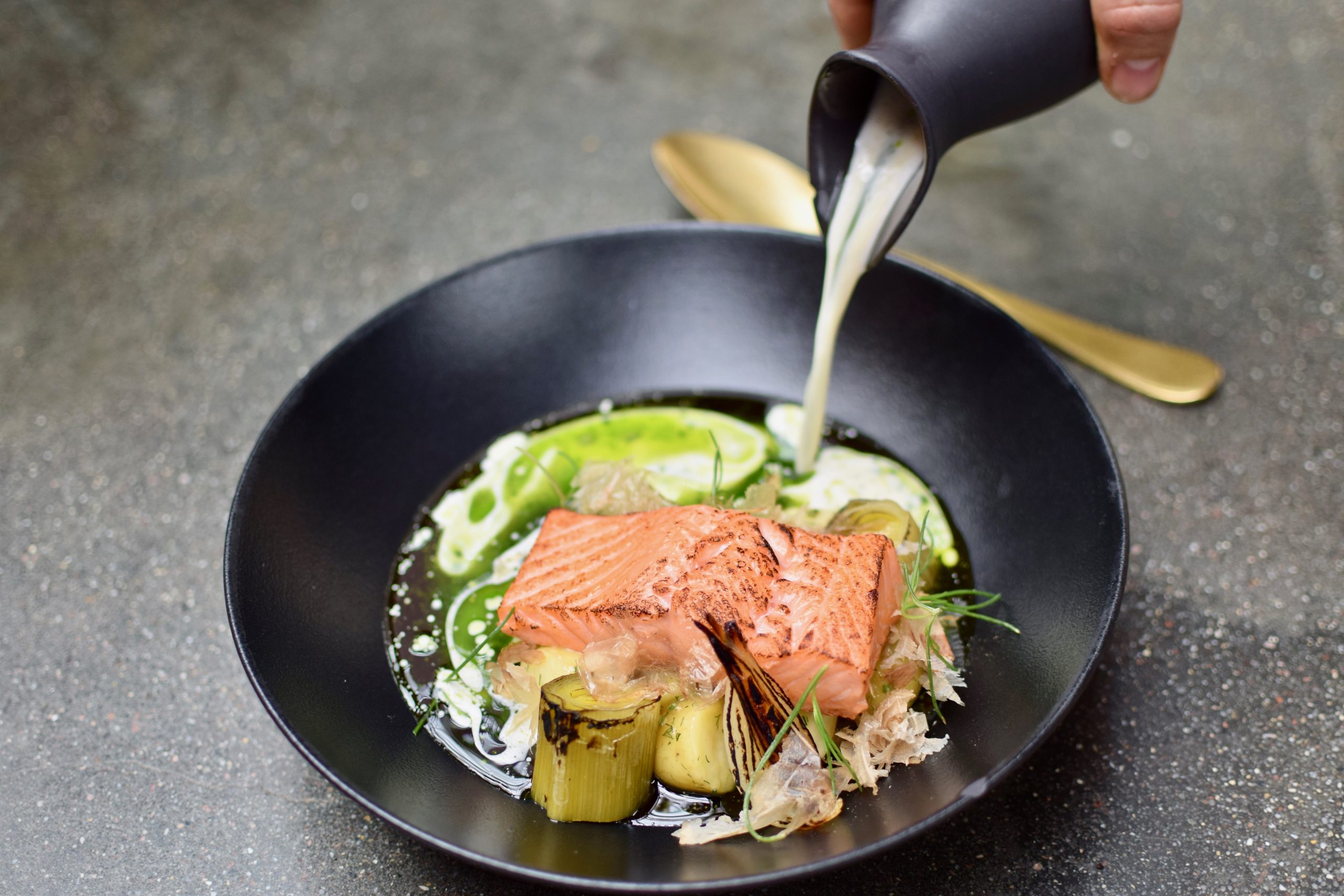
Authentic Finnish salmon soup, known as lohikeitto, contains salmon, potatoes, onion, leek, cream, dill, allspice, and salt as its core ingredients. These simple, clean components combine to create a rich, warming broth that has been a staple of Finnish home cooking and coastal cuisine for generations. The sections below unpack each element of the soup in detail, from the dairy debate to the ideal cut of fish.
What makes Finnish salmon soup different from other fish soups?
Finnish salmon soup stands apart from other fish soups through its combination of a cream-enriched broth, root vegetables, and a restrained spice profile that lets the quality of the fish speak for itself. Unlike Mediterranean fish soups that rely on tomato bases and bold aromatics, lohikeitto is built on clarity, freshness, and simplicity. The result is a soup that is both delicate and deeply satisfying.
Most fish soups around the world use the fish as one ingredient among many competing flavours. In lohikeitto, the salmon is the centrepiece, and every other ingredient exists to support it. The broth is typically made from a fish stock base, often simmered from the salmon’s own bones and head, which gives the soup a depth that cannot be replicated with a generic stock cube.
The cultural context matters too. Finnish food tradition values purity and honesty in ingredients. Lohikeitto reflects this philosophy: no artificial flavour enhancers, no heavy sauces, and no unnecessary complexity. It is a soup that rewards the cook who starts with excellent raw materials, which is precisely why the quality of the salmon you choose makes such a significant difference to the final bowl.
What are the essential ingredients in authentic Finnish salmon soup?
The essential lohikeitto ingredients are fresh salmon, potatoes, onion or leek, cream, dill, allspice berries, bay leaf, and salt. These eight components form the non-negotiable foundation of an authentic Finnish salmon soup. Everything else is a variation or a personal touch added by individual cooks and chefs.
- Fresh salmon: The primary protein and the source of the soup’s character. Cut into generous chunks so the fish holds its shape during cooking.
- Potatoes: Waxy varieties work best because they hold together rather than dissolving into the broth. They add body and a gentle starchiness.
- Leek or onion: Leek is the more traditional choice in many Finnish households, offering a milder, slightly sweet flavour that does not overpower the fish.
- Cream: Full-fat cream gives the broth its signature richness and silky texture. This is what separates lohikeitto from lighter fish broths.
- Fresh dill: Added at the very end of cooking to preserve its brightness. Dill is the defining herb of Finnish salmon soup and should never be skipped.
- Allspice berries: Used whole during simmering to add a warm, subtly spiced undertone without dominating the flavour.
- Bay leaf: A quiet background note that rounds out the broth.
- Salt: Essential for drawing out the natural flavours of both the fish and the vegetables.
Some recipes also include carrots, which add a gentle sweetness and a welcome colour contrast in the bowl. White pepper is occasionally used alongside allspice for a little more warmth. These additions are common but not universal, and a soup made with only the core eight ingredients is no less authentic.
Does authentic lohikeitto use cream or milk?
Authentic lohikeitto uses cream, not milk. Full-fat cream is what gives the soup its characteristic richness and smooth, velvety texture. While some lighter home recipes substitute milk or a combination of milk and cream to reduce calories, the traditional Finnish salmon soup recipe calls for cream as the dairy component.
The distinction matters more than it might seem. Cream produces a broth that coats the palate and carries the flavour of the salmon and dill forward with each spoonful. Milk creates a thinner, less cohesive liquid that can sometimes taste watery against the boldness of the fish. If you are aiming for the version of lohikeitto that has earned its reputation as a Finnish comfort food classic, cream is not optional.
It is worth noting that the cream is typically added toward the end of cooking, after the potatoes and fish are nearly done. This prevents the dairy from breaking or curdling due to prolonged exposure to high heat. A gentle simmer after adding the cream is all the soup needs before the fresh dill goes in and the bowl is ready to serve.
What type of salmon works best in Finnish salmon soup?
Fresh, high-quality Atlantic salmon or Baltic salmon works best in Finnish salmon soup. The fish should be firm, brightly coloured, and smell clean and oceanic rather than overpoweringly fishy. The cut matters too: skin-on fillets cut into thick, even pieces hold their shape during cooking and release natural oils that enrich the broth.
Wild-caught salmon, when available, tends to have a more pronounced flavour and a firmer texture than farmed alternatives. Baltic salmon in particular carries a depth of flavour that suits the simplicity of lohikeitto exceptionally well, since the soup provides very little masking of the fish’s natural character. This is why sourcing matters so much in a recipe with so few ingredients.
At Merimakasiini, we maintain close relationships with local fishermen who deliver the day’s catch directly to our kitchen. Our lohikeitto on our restaurant menu, made from a secret recipe that has been refined over 30 years, is built on salmon that has often been swimming in Baltic waters just hours before it reaches the bowl. That level of freshness is difficult to replicate at home, but it illustrates the standard worth aiming for when selecting your fish.
If fresh salmon is unavailable, a high-quality refrigerated fillet is always preferable to frozen. If you must use frozen salmon, thaw it slowly in the refrigerator overnight rather than at room temperature, and pat it completely dry before adding it to the soup to avoid diluting the broth with excess water.
Which spices and herbs are used in traditional Finnish salmon soup?
Traditional Finnish salmon soup uses a deliberately minimal spice profile: allspice berries, bay leaf, white or black pepper, and salt during cooking, with generous fresh dill added at the very end. This restraint is intentional. The goal is to season the soup rather than transform it, allowing the salmon’s natural flavour to remain the dominant note in the bowl.
Allspice is the most distinctive spice in lohikeitto and the one that most clearly marks it as a Finnish dish rather than a generic cream-based fish soup. The berries are added whole to the simmering broth and removed before serving. Their warm, slightly clove-like character weaves through the soup without announcing itself too loudly.
Fresh dill deserves special attention because it functions differently from the other seasonings. While allspice and bay leaf work in the background during cooking, dill is a finishing herb that provides brightness, colour, and a clean herbal note that lifts the entire bowl. Dried dill is a poor substitute; it lacks the aromatic freshness that makes the soup feel alive. If fresh dill is unavailable, fresh chives can provide a milder alternative, though the flavour profile will shift noticeably.
Some cooks add a small amount of white wine to the broth before the cream, which introduces a subtle acidity that balances the richness. This is a refinement rather than a tradition, but it is a worthwhile one if you want to add another layer of complexity to a classic recipe.
How does the freshness of salmon affect the soup’s flavour?
The freshness of salmon has a direct and significant impact on the flavour of Finnish salmon soup. Fresh salmon produces a clean, sweet, and delicate broth, while older fish introduces an increasingly strong, sometimes unpleasant fishiness that no amount of seasoning can fully correct. In a soup as simple as lohikeitto, there is nowhere for poor-quality fish to hide.
When salmon is genuinely fresh, it releases its natural oils and proteins into the broth in a way that creates richness and depth without heaviness. The flesh remains tender and holds its shape rather than falling apart into the liquid. The overall impression is of a soup that tastes clean and bright, even though it is made with cream and a relatively rich base.
As salmon ages, even by a day or two beyond its peak, it begins to develop compounds that produce that characteristic strong fish smell. These carry directly into the broth. The soup becomes heavier and more one-dimensional, and the delicate balance between the cream, dill, and allspice is overwhelmed. This is why professional kitchens that take lohikeitto seriously treat fish sourcing as a non-negotiable priority rather than an afterthought.
A practical tip for home cooks: buy your salmon on the day you plan to make the soup. When you are at the fishmonger or market, press gently on the flesh with a finger. Fresh salmon springs back immediately. If the indentation remains, the fish has been sitting too long. The eyes of a whole fish should be clear and bright, not cloudy, and the gills should be a vivid red rather than a dull brownish-grey. These simple checks take seconds and make a meaningful difference to what ends up in your bowl.