Finnish and Scandinavian food traditions share a Nordic foundation but are meaningfully distinct. Finnish cuisine developed in relative isolation, shaped by a harsh inland climate, forest foraging culture, and Eastern European influences that set it apart from the coastal, maritime-driven cooking of Norway, Sweden, and Denmark. The sections below unpack those differences question by question, from ingredients and fish culture to the history that made these traditions diverge.
What makes Finnish cuisine distinct from Scandinavian cooking?
Finnish cuisine is distinct from Scandinavian cooking primarily because of its stronger reliance on foraged and preserved ingredients, its Eastern culinary influences, and its deep connection to lakes rather than open seas. While both traditions prize simplicity and seasonal produce, Finnish food culture has a heavier, more rustic character rooted in survival cooking developed over centuries of cold, isolated living.
Where Scandinavian cooking tends toward clean, often coastal flavors with an emphasis on cured and smoked fish, Finnish cuisine leans into root vegetables, wild mushrooms, game meat, and thick dairy-based soups. Rye bread is practically a cultural institution in Finland, eaten daily in forms far denser and more sour than anything typical on a Swedish or Danish table. Fermented dairy products like viili and piimä are staples that have no real equivalent in Scandinavian kitchens.
Finnish food also reflects a relationship with silence and landscape rather than trade and commerce. The cooking is honest and unfussy, built around what the forest, the lake, and the root cellar could provide during a long winter. That self-sufficiency gave Finnish cuisine a distinctive texture and flavor profile that feels genuinely its own, even when neighboring traditions share some of the same raw ingredients.
Which countries are actually considered Scandinavian in food culture?
In food culture, Scandinavian cuisine typically refers to the cooking traditions of Norway, Sweden, and Denmark. These three countries share closely related languages, historical ties, and coastal geographies that produced a broadly unified culinary identity centered on seafood, cured meats, dairy, and open-faced sandwiches. Finland is often grouped with them under the broader label of Nordic cuisine, but it is not Scandinavian in the strict sense.
The distinction matters more than it might seem. The Nordic label also includes Iceland and sometimes the Faroe Islands, each of which brings its own traditions. Finland’s inclusion in the Nordic group is cultural and geographic, but its food heritage diverges enough from the Scandinavian three that treating it as interchangeable leads to real misunderstandings about what Finnish food actually is.
When food writers and chefs talk about the New Nordic movement that emerged in the early 2000s, they are largely drawing on Scandinavian, and particularly Danish and Swedish, culinary philosophy. Finland has participated in that conversation but has also maintained a parallel, older tradition that predates the trend and operates on its own terms.
How does the role of fish differ between Finnish and Scandinavian cuisines?
Fish plays a central role in both Finnish and Scandinavian food traditions, but the types of fish, the preparation methods, and the cultural meaning differ considerably. Scandinavian cuisines have historically been shaped by deep-sea and open-ocean fishing, making cod, herring, and mackerel foundational. Finnish fish culture, by contrast, is built around freshwater lakes and the Baltic Sea, making perch, pike, whitefish, and Baltic herring the true staples.
Freshwater versus saltwater fish traditions
Finland has over 180,000 lakes, and that inland water network defined what Finns ate for centuries. Perch and pike are everyday fish in Finnish home cooking in a way that has no Scandinavian parallel. Whitefish, known in Finnish as siika, is prized for its delicate flavor and appears in everything from simple pan-frying to elegant restaurant preparations. These freshwater species require different cooking techniques than the robust saltwater fish common in Norwegian or Danish kitchens.
Salmon as a shared but differently expressed tradition
Salmon is where the traditions most visibly overlap. Both Finnish and Scandinavian cuisines celebrate salmon, but the expressions differ. Gravlax, the Nordic cured salmon preparation, is closely associated with Sweden and Norway. In Finland, salmon more often appears in soup form. The Finnish salmon soup, lohikeitto, is a cream-based, potato-rich dish that is deeply comforting and entirely distinct from anything on a typical Scandinavian table. At Merimakasiini, our version of lohikeitto has been made to the same secret recipe for over 30 years and remains our most popular dish year-round, which says something real about how central this preparation is to Finnish seafood identity.
What traditional ingredients are unique to Finnish food culture?
Several ingredients are genuinely unique to Finnish food culture or used in ways that have no close Scandinavian equivalent. These include rye in its darkest, most fermented forms, wild forest mushrooms like kantarelli (chanterelle) and suppilovahvero, cloudberries, lingonberries used as a savory condiment rather than a sweet preserve, and a variety of fermented dairy products that reflect centuries of self-sufficient farmstead cooking.
Tar, or terva in Finnish, is perhaps the most unusual flavoring in Finnish culinary tradition. Birch tar has been used to flavor candies and even some spirits, a taste that is entirely foreign to Scandinavian palates. It is smoky, slightly bitter, and unmistakably Finnish in a way that no other Nordic ingredient quite matches.
Reindeer meat is another ingredient that, while present in northern Norway and Sweden, holds a more central cultural place in Finnish Lapland cooking. Poronkäristys, sautéed reindeer with mashed potatoes and lingonberry, is a Finnish national dish with deep roots in Sámi food culture. The way Finland integrates indigenous Sámi culinary traditions into its broader national food identity also sets it apart from how Scandinavian countries have handled similar influences.
How did history shape the differences between these food traditions?
History is the most powerful explanation for why Finnish and Scandinavian food traditions diverged. Finland spent centuries under Swedish rule and then under Russian imperial control, absorbing culinary influences from both directions. That dual inheritance gave Finnish cuisine a character that sits between Western Nordic and Eastern European food cultures, a position that Scandinavian countries simply did not occupy.
During the centuries of Swedish rule, some Scandinavian cooking habits did enter Finnish kitchens, particularly among the upper classes. But the majority of the Finnish population lived as subsistence farmers and fishermen in conditions far harsher than those found in coastal Scandinavia. That hardship produced a cooking tradition built on preservation, fermentation, and maximum use of every available ingredient. Waste was not an option, and that necessity shaped flavor preferences that persist today.
The period of Russian influence brought Eastern European ingredients and techniques into Finnish cooking, including the use of sour cream, certain pastry traditions, and a broader tolerance for fermented and pickled flavors. Scandinavian cuisines, shaped by Atlantic trade routes and closer connections to Central European commerce, developed along a different axis entirely. By the time Finland gained independence in 1917, its food culture had already accumulated centuries of distinctly non-Scandinavian influences that no political shift could erase.
Where can you experience authentic Finnish seafood traditions in Helsinki?
Helsinki is one of the best cities in the world to experience authentic Finnish seafood traditions, and the harbor areas of the city are the natural place to start. The capital’s relationship with the Baltic Sea and its network of island waterways means that genuinely fresh, locally caught fish is available in a way that is rare in most European capitals.
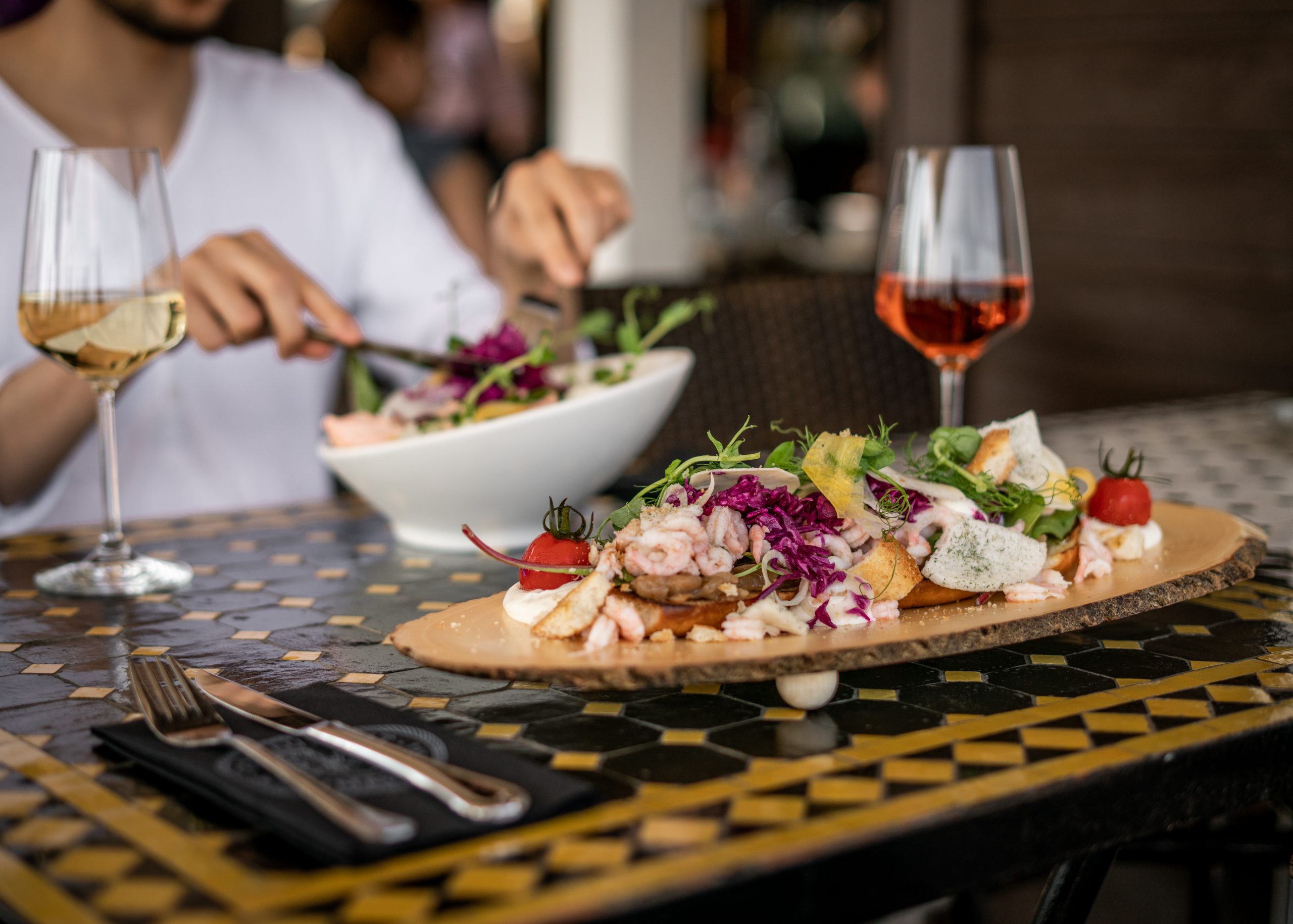
The Hietalahti harbor area on the western edge of the city center is one of Helsinki’s most atmospheric spots for seafood. We have been serving guests at Merimakasiini in Hietalahdenranta since 1986, and our connection to local fishermen who deliver the day’s catch directly to our kitchen means the fish on your plate has often been swimming in the Baltic just hours earlier. Our seasonal Finnish seafood restaurant menu reflects genuine Finnish seafood tradition: the lohikeitto made to a 30-year-old recipe, bouillabaisse, and the Fruits de Mer seafood platter sit alongside seasonal dishes created by our head chef Markus Kornmayer, who works with whatever the season and the sea provide.
When visiting Helsinki with an interest in understanding Finnish food traditions rather than just eating a meal, a few practical tips help. Eat at lunchtime as well as dinner, because Finnish lunch culture often offers the most honest, everyday expressions of traditional cooking. Visit the Hietalahti market hall nearby to see what local producers are selling. Ask about the origin of the fish you are ordering, because a restaurant that knows where its fish came from is a restaurant that takes Finnish seafood tradition seriously. And choose dishes like lohikeitto or whitefish preparations over generic European seafood options, because those are the dishes where Finnish culinary identity is most clearly expressed.