A truly impressive business lunch venue for clients combines three things guests notice immediately: a distinctive setting, exceptional food quality, and attentive professional service. These elements work together to signal that the host has put genuine thought into the occasion, which sets a positive tone before a single word of business is exchanged. The questions below unpack each factor so you can make a confident choice next time you need to host clients or colleagues for a corporate lunch.
What do guests notice first about a business lunch venue?
Guests form their first impression of a business lunch venue within seconds of arriving. The physical setting, the greeting they receive at the door, and the overall atmosphere all register before anyone has looked at a menu. A venue that feels purposeful and well-maintained immediately tells guests that the host values their time and company.
Beyond the visual impression, guests quickly pick up on practical details: whether the space is noisy or calm, whether tables are spaced far enough apart for a private conversation, and whether the staff acknowledge them promptly. These small signals accumulate fast. A warm, professional welcome from the front-of-house team can elevate an already appealing space, while a chaotic or indifferent reception can undermine even the most beautiful room.
The view from the table also carries more weight than many hosts expect. A distinctive outlook, such as a working harbour, a waterfront, or a skyline, gives guests something to respond to emotionally. It creates an immediate talking point and makes the experience feel curated rather than convenient.
How does food quality affect the success of a business lunch?
Food quality has a direct impact on the success of a business lunch because it shapes the energy and mood of everyone at the table. When the food is genuinely good, guests relax, conversation flows more naturally, and the meal becomes a shared positive experience rather than a functional pause in the working day. Poor or mediocre food, on the other hand, creates a subtle but persistent distraction.
For a lunch venue to impress, the menu should reflect a clear culinary identity and use high-quality ingredients. Guests notice when dishes taste fresh and considered rather than mass-produced. A restaurant with a well-defined specialty, whether that is seasonal seafood, regional produce, or a signature dish with genuine heritage, signals a level of craft that generic all-purpose menus rarely achieve.
Variety also matters, particularly in a professional context where dietary requirements differ across a group. A strong business lunch menu offers meaningful choices for different preferences without forcing anyone to settle for a token option. When every guest finds something genuinely appealing, the meal becomes inclusive rather than awkward.
What atmosphere works best for professional dining?
The ideal atmosphere for professional dining is calm, comfortable, and distinctive without being distracting. Guests should be able to hold a conversation at a normal volume, feel at ease in the space, and focus on the people across the table rather than the noise around them. A venue that strikes this balance makes business conversations feel natural rather than forced.
Acoustic comfort is one of the most underrated qualities in a corporate lunch restaurant. A room that amplifies noise makes it genuinely difficult to discuss anything sensitive or nuanced. Venues with softer surfaces, thoughtful layout, and well-spaced tables handle this far better than open, hard-surfaced dining rooms designed for high turnover.
Character also matters. A venue with a clear identity, whether through its architecture, its decor, or its connection to a specific place or tradition, gives guests something to respond to. A space that feels generic or interchangeable with a dozen others offers no memorable quality. The best professional dining environments feel like a deliberate choice, not a default.
Why does service style matter more at a business lunch than at a casual meal?
Service style matters more at a business lunch because the host is being judged alongside the venue. When a guest has a poor experience with staff, that reflects on the person who chose the restaurant. Attentive, discreet, and well-timed service allows the business conversation to take centre stage, while clumsy or intrusive service interrupts the flow of the meeting at critical moments.
Table service, rather than counter or self-service, is a meaningful distinction in a professional context. When food and drinks are brought to guests, they can remain focused on the conversation without breaking the rhythm of the meeting to queue, collect, or navigate a buffet. This is particularly important when the lunch has a specific agenda or when one person is hosting several guests at once.
The pace of service also requires careful calibration. Guests at a business lunch often have time constraints, and a kitchen that reads the table well, neither rushing nor leaving guests waiting, demonstrates a level of professionalism that mirrors what a host wants to project. Staff who understand the difference between a quick working lunch and a longer relationship-building meal, and who adjust accordingly, are genuinely valuable.
What location features make a lunch venue easier to impress with?
A lunch venue impresses more easily when it combines accessibility with a setting that feels special. Guests should be able to arrive without stress, whether by public transport or by car, and the location itself should add something to the experience rather than simply being convenient. A venue that ticks both boxes removes friction and creates positive associations before the meal even begins.
Accessibility and parking
For a business lunch in Helsinki, proximity to the city centre and good transport links are practical priorities. Guests arriving from different directions need a venue that is straightforward to reach. On-site or nearby parking is a significant advantage, particularly for guests who are travelling between meetings or arriving from outside the city.
A setting that does the work for you
A distinctive location, such as a historic harbour, a waterfront promenade, or a building with architectural character, gives the venue a built-in story. It makes the choice feel considered rather than arbitrary and gives guests a positive impression that lingers after the meal. For a business lunch in Helsinki, a harbour setting with open water views adds a sense of occasion that a standard city-centre dining room simply cannot replicate.
When should you book a dedicated seafood restaurant for a business lunch?
A dedicated seafood restaurant is the right choice for a business lunch when you want to offer guests something genuinely memorable rather than a reliable but unremarkable meal. Seafood restaurants with a strong culinary identity, a clear connection to local suppliers, and a signature menu give the occasion a character that generic venues lack. They work especially well when the guest is visiting from outside the region and you want to offer an authentic local experience.
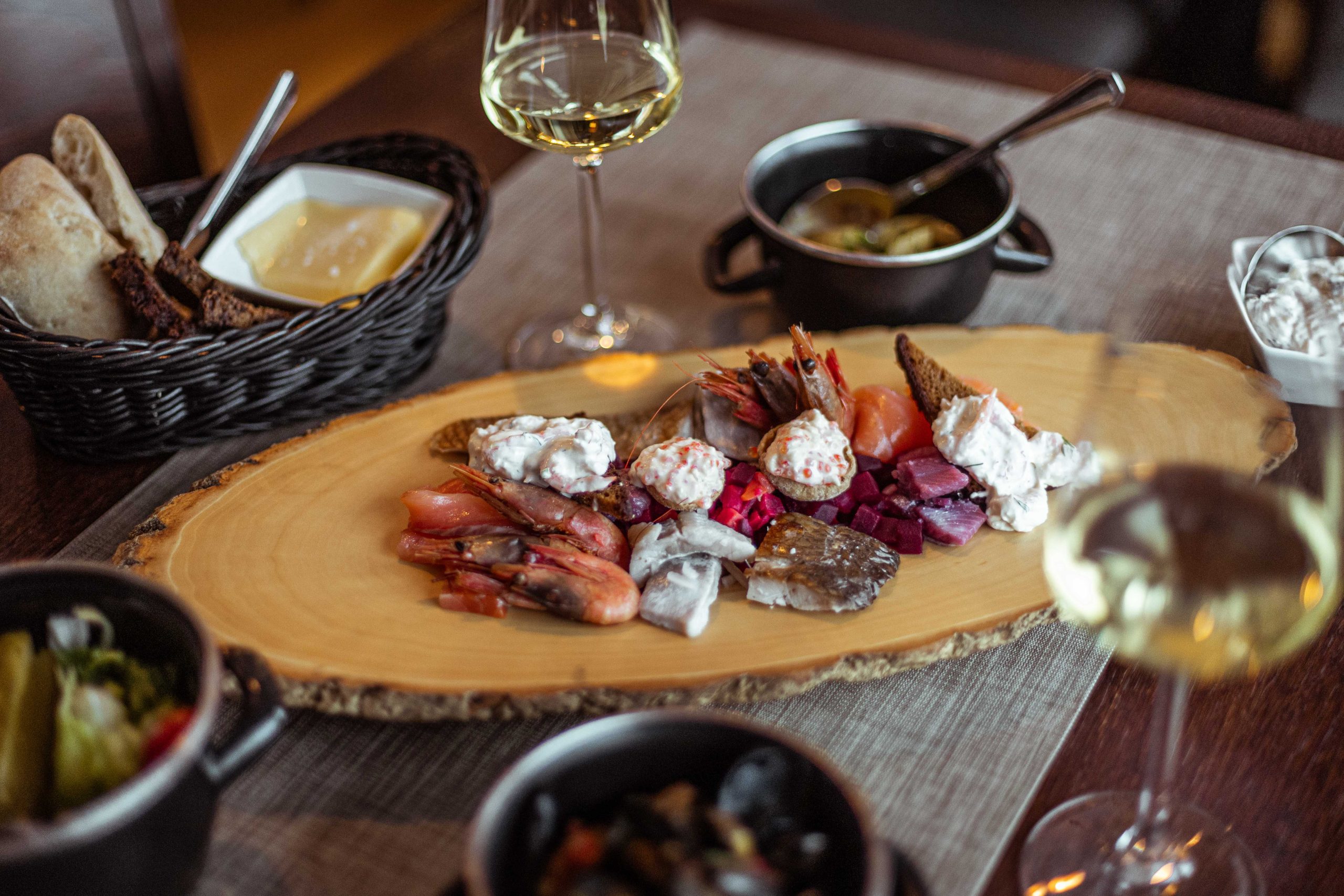
They are also a strong choice when the group includes people who appreciate food as part of the experience, not just as fuel. A restaurant known for dishes like a classic fish soup made to a decades-old recipe, a bouillabaisse, or a shared seafood platter creates a shared moment around the table that supports conversation and connection in a way that a standard business lunch rarely does.
We serve a full lunch menu at Merimakasiini, including a three-course option and dishes from our classic menu, with choices available for different dietary preferences. Lunch is served directly to the table, so guests can stay focused on the conversation rather than managing the logistics of the meal. The harbour setting in Hietalahdenranta, a short walk from the Helsinki city centre, offers the kind of distinctive atmosphere that makes a business lunch venue genuinely impressive rather than simply functional. We recommend booking a table in advance to secure a quieter spot, though we welcome walk-in lunch guests whenever space allows.