
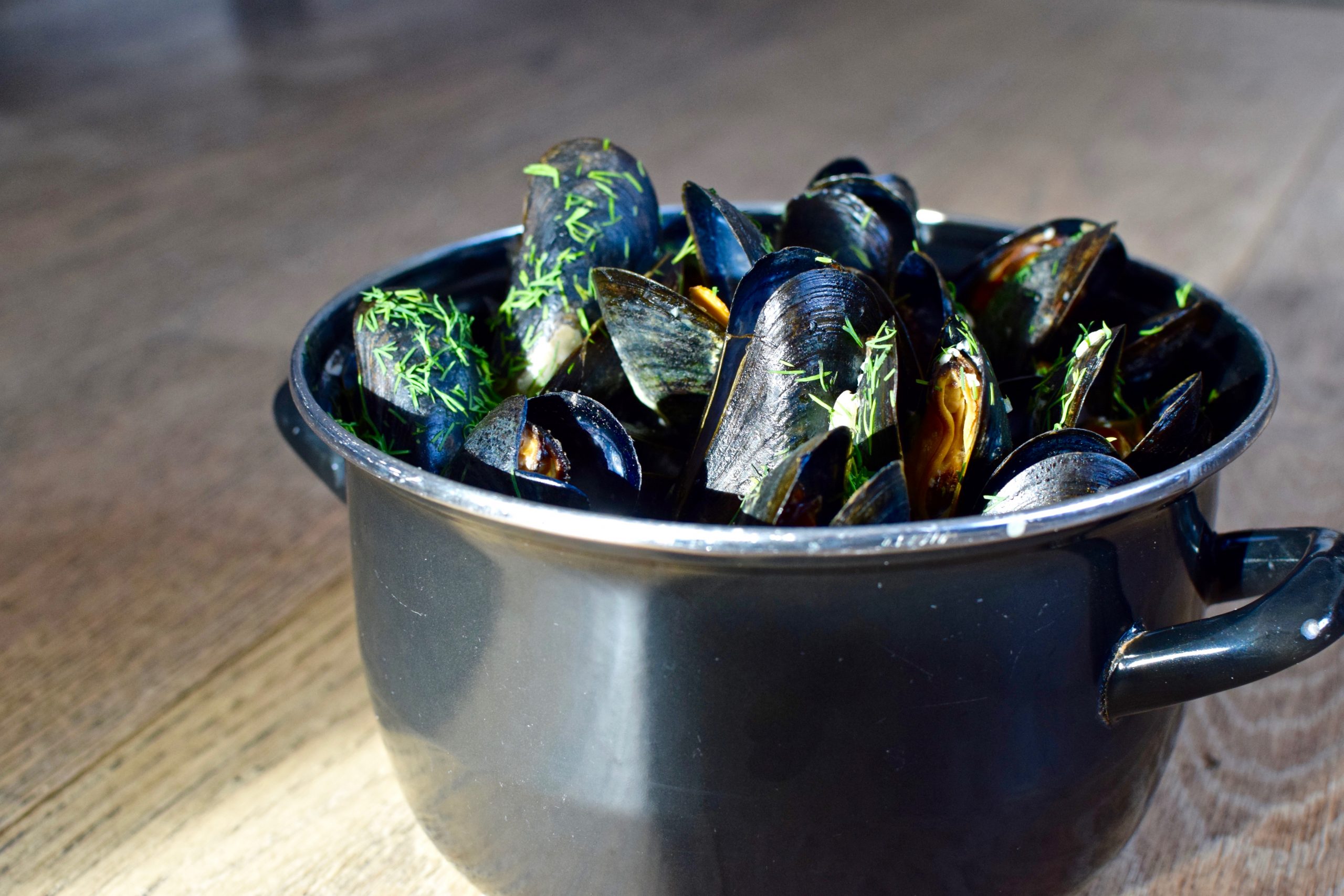
Mussel season in Finland runs from September through April, making autumn and winter the prime time to enjoy Finnish mussels at their best. The guiding principle is simple and memorable: eat mussels in months that contain the letter “R” in Finnish, which covers syyskuu through huhtikuu. The sections below explain why this rule exists, how to handle and cook fresh mussels, and where to find the finest bowl in Helsinki.
What makes Finnish mussels safe to eat at certain times of year?
Finnish mussels are safe to eat during the cooler months, roughly September through April, because cold Baltic waters suppress the growth of harmful algae that mussels filter and accumulate. Mussels are filter feeders, meaning they draw water through their bodies continuously and concentrate whatever is present in that water, including toxins produced by certain algae species. When water temperatures stay low, those algae populations remain small and manageable.
The key safety concern is a group of naturally occurring compounds called marine biotoxins. Blue mussels, the species found in the Baltic Sea, can accumulate these toxins without showing any visible signs of contamination. The shellfish themselves are unaffected, but a person who eats contaminated mussels may experience symptoms ranging from digestive discomfort to, in more serious cases, neurological effects.
Finnish food safety authorities monitor shellfish harvesting areas throughout the year and issue guidance based on water quality and algae levels. During the safe season, the risk of harmful algae blooms is negligible, and properly sourced Baltic mussels present no unusual health concerns. This is why working with trusted suppliers who understand local waters matters so much when serving fresh shellfish.
When exactly does mussel season start and end in Finland?
The Finnish mussel season starts in September and ends in April. These six to seven months represent the window when Baltic water temperatures are cool enough to keep harmful algae blooms in check, making wild and locally harvested mussels both safe and flavourful. The season typically peaks between October and February, when mussels are plump, firm, and at their most flavourful.
The traditional “R-month” rule, which exists in many Northern European seafood cultures, maps almost perfectly onto this scientific reality. In Finnish, the months from syyskuu (September) to huhtikuu (April) all contain the letter R, providing a practical memory aid that generations of seafood lovers have relied on. While the rule is a simplification, it remains a reliable guide.
It is worth noting that imported mussels, farmed in controlled Atlantic or Mediterranean environments, are available year-round in Finland and follow different safety windows. The seasonal restriction applies specifically to locally harvested Baltic shellfish. When in doubt, ask your fishmonger or restaurant whether the mussels on offer are domestic or imported, and how recently they were harvested.
Why are mussels avoided during Finnish summer months?
Mussels are avoided during the Finnish summer, roughly May through August, because warm Baltic waters trigger algae blooms that can make shellfish unsafe to eat. As sea surface temperatures rise, certain phytoplankton species multiply rapidly. Blue mussels filter these organisms continuously, and some algae produce toxins that accumulate in mussel tissue faster than the body can process them.
The Baltic Sea is a particularly sensitive environment. Its brackish water, relatively shallow depth in many areas, and long summer daylight hours create ideal conditions for algae growth during the warmest months. Harmful algal blooms are not visible to the naked eye and do not affect the appearance, smell, or texture of the mussels, which is precisely what makes summer harvesting risky without laboratory testing.
Beyond safety, there is also a quality argument for avoiding summer mussels. During the warmer months, mussels redirect their energy toward reproduction rather than building up the dense, flavourful flesh that makes them so satisfying to eat. A summer mussel is often smaller, leaner, and less rewarding on the plate than one harvested in October or February. So the seasonal rule protects both your health and your dining experience.
Are Finnish mussels different from imported mussels?
Yes, Finnish Baltic mussels are meaningfully different from imported varieties, primarily in size, salinity, and flavour profile. Baltic blue mussels (Mytilus trossulus or the hybrid populations found in the Baltic) grow in lower-salinity water than their Atlantic counterparts, which makes them noticeably smaller but gives them a distinctly clean, mild, and slightly sweet flavour that many seafood enthusiasts find more delicate and nuanced.
Imported mussels, most commonly from Norway, the Netherlands, or Ireland, are typically larger and carry a bolder, brinier flavour that reflects the higher salt content of open Atlantic waters. Both are excellent, but they offer different eating experiences. A Finnish mussel rewards simplicity, needing little more than a splash of white wine and some good bread to shine. A large Atlantic mussel can hold its own against richer sauces and more complex preparations.
From a sustainability perspective, locally sourced Baltic mussels have a much shorter journey from water to plate, which reduces their environmental footprint and ensures exceptional freshness. We maintain close relationships with local fishermen who deliver their catch directly, which means the mussels reaching our kitchen have often been in the sea just hours before service. That kind of freshness is simply not replicable with imported shellfish, however well handled.
How should fresh mussels be prepared for the best flavour?
Fresh mussels should be stored in the refrigerator in an open container, cooked within one to two days of purchase, and never submerged in water or sealed in an airtight bag. Before cooking, scrub the shells under cold running water, remove the beard (the fibrous threads protruding from the shell), and discard any mussels that are already open and do not close when tapped firmly.
Cleaning and checking mussels
The most important step is sorting. Live mussels close when handled or tapped because they are reacting to stimuli. Any mussel that stays open despite being tapped should be discarded. Equally, any mussel that remains closed after cooking should not be eaten. These are signs that the mussel was dead before cooking began and is not safe to consume.
Debearding is straightforward: grip the fibrous threads between your thumb and forefinger and pull firmly toward the hinge of the shell. Do this just before cooking rather than in advance, as debearding shortens the mussel’s remaining lifespan.
Cooking techniques that preserve flavour
The classic method is steaming in a wide, lidded pot with aromatics. A base of shallots, garlic, and a generous pour of dry white wine creates steam that opens the mussels gently and infuses them with flavour. Cook over high heat, covered, for three to five minutes, shaking the pot once or twice. The mussels are done the moment the shells open.
Avoid overcooking at all costs. Overcooked mussels become rubbery and lose the tender, oceanic quality that makes them so appealing. If you are adding cream or butter to finish the broth, do so off the heat or over very low heat once the mussels are already open. Serve immediately with crusty bread to mop up the cooking liquid, which is often the best part of the dish.
Where can you eat the best mussels in Helsinki?
For the best mussels in Helsinki, look for a restaurant that sources directly from local fishermen, serves the catch the same day it arrives, and understands how to let quality ingredients speak for themselves. Proximity to the sea and a genuine commitment to seasonal cooking make the biggest difference.
At Merimakasiini, we have been serving fresh seafood from Hietalahti Harbour since 1986, and mussels hold a proud place on our seasonal seafood menu in Helsinki. Our kitchen works with local fishermen who supply the catch directly, which means the shellfish we serve have spent minimal time out of the water before reaching the table. The harbour views from our dining room and terrace make the setting as memorable as the food itself.
When choosing where to eat mussels in Helsinki, a few questions are worth asking: Where did the mussels come from? When were they harvested? Are they being served in season? A restaurant that can answer those questions confidently is one that takes its seafood seriously. The best mussel season in Finland is happening right now through April 2026, so there is no better time to reserve a table for fresh mussels and seek out a bowl of properly prepared, freshly sourced Baltic shellfish.