
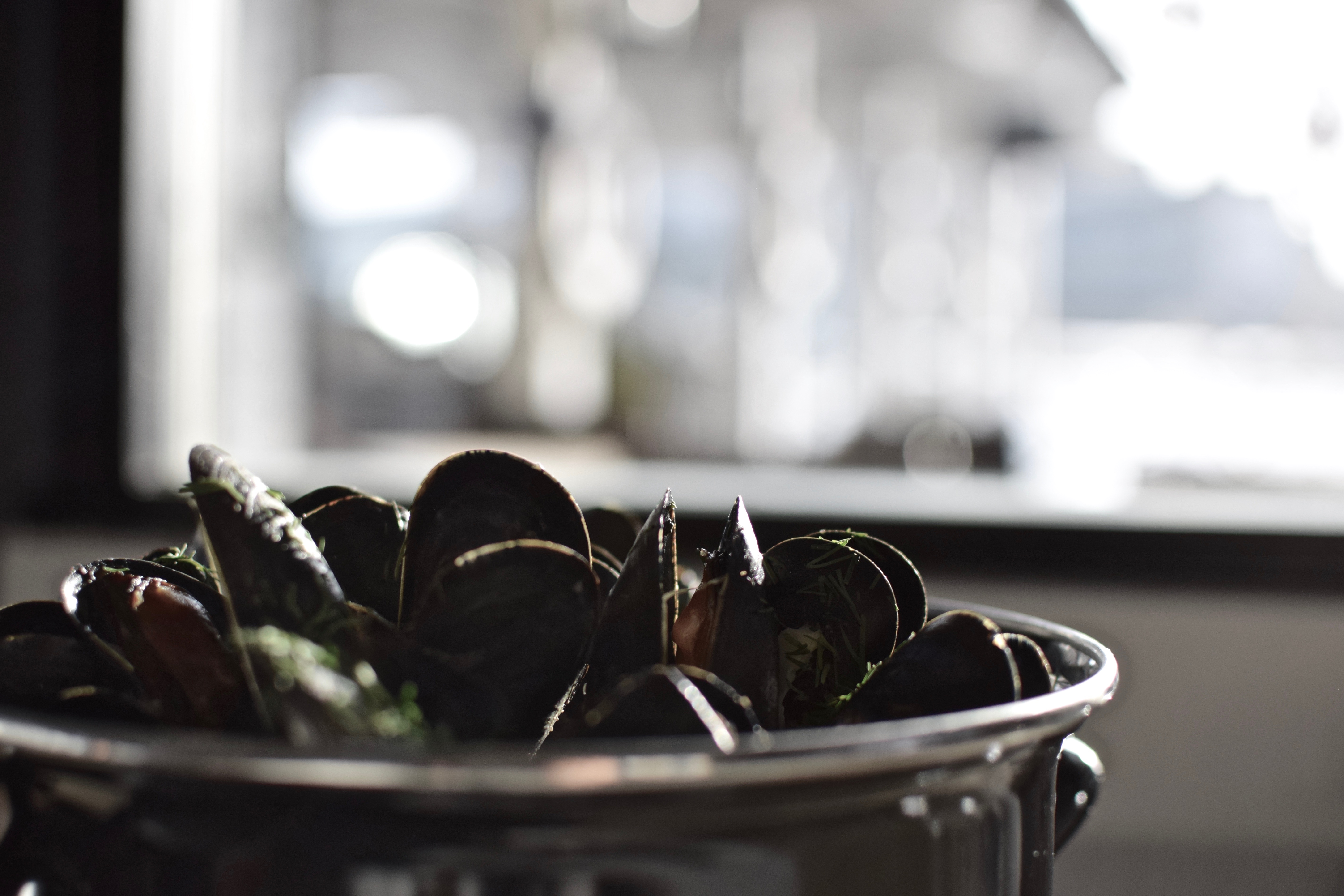
When it comes to the best mussels in Helsinki, Merimakasiini in Hietalahti harbour stands out as a top destination, serving blue mussels in a legendary cream and white wine broth with decades of kitchen tradition behind it. Helsinki’s seafood scene is genuinely strong, and the city’s proximity to the Baltic Sea means that freshness is a real advantage, not just a marketing claim. Below, we answer the most common questions about eating mussels in Helsinki so you can make the most of your next seafood meal.
Where do Helsinki locals go for mussels?
Helsinki locals looking for mussels tend to gravitate toward harbour-side restaurants where the supply chain between sea and kitchen is as short as possible. Freshness is the deciding factor, and restaurants with direct relationships with local fishers consistently deliver the best results. The atmosphere matters too: eating mussels beside the water simply feels right.
We at Merimakasiini have been welcoming guests at Hietalahdenranta since 1986, and our Simpukkakattila has become one of the most recognised mussel dishes in the city. Blue mussels are served in our house’s legendary cream and white wine broth, accompanied by ciabatta bread (gluten-free bread available on request). You can also add country-style fries with lime mayonnaise for 6 euros, making it a satisfying full meal. The classic pot is priced at 19 euros for a starter portion and 29 euros for a main.
What sets a genuinely local favourite apart from a tourist-facing seafood spot is consistency and sourcing. Locals return to places where they know the mussels will be alive and fresh on arrival, prepared simply enough to let the natural flavour of the shellfish come through. Harbour locations like Hietalahti offer that combination of reliable quality and a setting that makes the meal feel like more than just eating out.
What makes a great mussel dish in a Finnish restaurant?
A great mussel dish in a Finnish restaurant starts with live, fresh shellfish and a broth that complements rather than overwhelms them. The cooking liquid, whether cream-based, wine-based, or a combination of both, should be flavourful enough to stand on its own as a dipping sauce for good bread. Simplicity and quality of ingredients are the defining marks of an excellent mussel pot.
Finnish kitchen culture values clean, honest flavours, which suits mussels particularly well. The shellfish have a naturally briny, slightly sweet taste that benefits from restraint in seasoning. A well-made cream and white wine broth enhances the oceanic quality of the mussels without masking it, while aromatics like shallots, garlic, and fresh herbs add depth without complexity.
Bread is not an afterthought in a good mussel dish. The broth left at the bottom of the pot is often the best part of the meal, and a thick slice of ciabatta or a crusty baguette is the proper tool for capturing it. Restaurants that treat the accompaniments with the same care as the main ingredient signal that they understand what makes shellfish cooking genuinely satisfying. You can explore our full seafood and restaurant menu options to see how we approach every dish.
Are Baltic mussels different from Atlantic or Mediterranean ones?
Baltic mussels are smaller than their Atlantic or Mediterranean counterparts, but they are notably sweeter and more delicate in flavour due to the lower salinity of Baltic Sea water. The Baltic is one of the least salty seas in the world, and this directly affects the taste profile of the shellfish that live in it, producing a milder, cleaner flavour that many seafood lovers find particularly appealing.
Atlantic mussels, such as those farmed along the coasts of France, Ireland, and the Netherlands, grow larger and have a more pronounced briny taste. Mediterranean mussels tend to be plumper and carry a stronger mineral quality. Neither style is superior to the other; they simply suit different preparations and palates.
For Finnish cuisine, the gentler flavour of Baltic mussels works well with cream-based broths and subtle aromatics. The shellfish absorb the cooking liquid more readily because their flavour is less assertive, which means the balance between mussel and broth becomes especially important to get right. When a kitchen sources locally and cooks with that specific flavour profile in mind, the result is a dish that could not easily be replicated elsewhere.
What’s the best time of year to order mussels in Helsinki?
The best time to order mussels in Helsinki is during the colder months, roughly from autumn through early spring. Mussels are at their fullest and most flavourful when water temperatures are low, which causes them to store more glycogen and develop a richer, sweeter taste. Warm summer water can cause mussels to become lean and less satisfying on the plate.
The old rule of thumb about eating shellfish only in months containing the letter “R” (September through April) has a practical basis. During warmer months, mussels spawn, which depletes their energy reserves and leaves the meat thin and watery. While modern aquaculture and careful sourcing have extended the reliable season somewhat, the September to April window remains the peak period for quality.
That said, a restaurant with strong supplier relationships and high turnover can serve excellent mussels year-round, because freshness compensates for seasonal variation to a significant degree. If you are visiting Helsinki in summer and want mussels, the key question to ask is how recently the batch arrived and where it came from. A kitchen that knows its supply chain will be happy to answer.
How should mussels be served to get the most out of them?
Mussels should be served immediately after cooking, piping hot in a deep pot or bowl with plenty of broth, and accompanied by good bread for soaking. The shells act as natural insulation, but the dish loses heat quickly once plated, so timing between kitchen and table matters. A well-served mussel pot arrives with an empty bowl on the side for discarded shells and a finger bowl or napkins for hands-on eating.
The best approach to eating mussels is unhurried and tactile. Use an empty shell as a pincer to pull the meat from the others, work through the pot steadily, and finish with the broth. Rushing through a mussel dish misses much of its pleasure, which is as much about the ritual of eating as the flavour itself.
From a kitchen perspective, the most important rule is that any mussel that does not open during cooking should be discarded. An unopened mussel was not alive before cooking and is not safe to eat. This is a basic quality check that every good seafood kitchen applies without exception, and it is one of the clearest signals that a restaurant takes its shellfish seriously.
Pairing matters too. A crisp, dry white wine, such as a Muscadet, Chablis, or a Finnish craft cider, cuts through the richness of a cream broth and refreshes the palate between mussels. Fries alongside the pot, as we serve them with our Simpukkakattila, add a satisfying contrast of texture and make the meal feel complete without overcomplicating it. Ready to experience it for yourself? Reserve your table at Merimakasiini and enjoy the full mussel pot experience by the harbour.